
Description
Delhi is one of the most historically stratified and most culturally diverse urban locations in India, a place of centuries of architectural history and of metropolitan living. Being the capital of the country, it also draws the attention of the travellers who want to find the heritage monuments and markets, and the diversity of the cuisine and modern entertainment possibilities all in one place. Although it is not a country, nor does it lie within the geographical region of Southea...
st Asia, it is frequently mentioned and visited by most people in the region, making it one of the most mentioned travel hubs within the region. Most of the travellers who visit guided tours like Trip Plan India plan their tours with the help of the monuments, bazaars and cultural districts in India.
Delhi creates an attractive combination of the familiar and unfamiliar to Indian visitors. The culture can be seen in the festivals, museums, and historical quarters and the culinary experience can be seen on the street tastes to the fine dining experience. In spite of the fact that beaches and island environments are not typical city characteristics, nightlife areas, malls, and light structures offer some exciting evening activities. Hospitality services, accessibility and availability of public transport infrastructure also support the fact that it is a destination that can be visited in either the short term or the long term. All in all, the rich heritage, urban energy, and traveller-friendliness combine to form a very attractive tourism image, which is valued by various audiences in Delhi.
Why Visit Delhi
The key reason why travellers come to Delhi is the amazing historical and cultural saturation of the city, which provides an understanding of the periods of different eras of architectural and social development. The city does not have any coastal scenes, but it balances that with big monuments, historic temples, and huge markets that show the skills and traditional art. Evening entertainment thrives with glowing historical places, shopping centers, and restaurants that meet diverse tastes.
Exploring Delhi is affordable to most of the visitors in comparison to international travel costs, meaning that one gets quality moments without too many logistical challenges. The transport, accommodation, and guided experiences available in the city ease the movement around the city through tourism infrastructure. Local interaction and multilingual communication facilitate easy exploration, as well. All these elements make Delhi an attractive place to visit that offers education, cultural immersion, and entertainment in a travel system that can be handled.
Best Time to Visit Delhi
The choice of a season will increase the comfort of travel and the enjoyment of the activities. Climate changes influence the sightseeing, movement and outdoor involvement, and thus, knowing the seasonal patterns enables travellers to schedule their experiences in ways that would satisfy their tastes and expectations.
Summer Season in Delhi (March – May)
Summer has the advantage of the warm weather and the sun, which makes it the time to explore in the morning and visit indoor cultural spaces on the hottest days. Even though afternoons can be extremely active, the flexible planning would enable the visitors to enjoy the landmarks and markets efficiently.
Monsoon Season in Delhi (June – October)
Monsoon rainfall makes the surroundings fresh and does visual softening to the urban landscape. Infrequent rain can affect the schedule, but most travellers enjoy fewer people and less heat in the time between the downpours.
Winter Season in Delhi (November – February)
Winter is the time of warm temperatures which are suitable for a wide scope of sightseeing and outdoor activities. Clear skies and pleasant evenings turn out to be the most popular time of the year among the tourists who are visiting the cultural and historical sites.
How to Reach Delhi from India
The national connectivity that the city of Delhi experiences renders the accessibility of the city convenient via various modes of transportation. Before they embark on the trip, travellers are able to choose routes that are within their time, comfort expectations, and financial considerations.
By Air
Air transportation offers fast accessibility, and the domestic flight networks provide a broad accessibility to the cities of India via Delhi. The facilities and means of transit at the airport facilitate easy movement forward in the urban area.
By Train
The rail connections provide reliable and cost-effective access, and many of them end up in large rail stations in the city. This option is used extensively because of comfortable travel classes and regular schedules.
By Road
Highway infrastructure allows moving by bus or personal cars, which allows flexibility in the schedule and choice of routes. The road trips provide some slow introduction to the urban environment, which adds to the expectation and continuity in the traveling.
Delhi Trip Planner
A well thought-out itinerary helps the traveller to explore as much as possible with little or no logistical pressure. One can create tailor-made travel programs using the services such as Trip Plan India that will match the personal interests such as heritage exploration and urban recreational exploration. Planning enables the visitor to combine the visits to monuments and visits to the market and the time of relaxation.
Travel arrangements represent a diverse range of people, such as families, couples in the celebration of a special occasion, and a group of people who enjoy spending time with a larger number of people. Budget-conscious planning is more concerned with the effective utilization of resources whereas premium arrangements are more concerned with comfort and convenience. Tight coordination of booking guarantees effective coordination of accommodation arrangements, getting about the city and arranging activities.
Planning can also be extended to documentation writing, accommodation organisation and curated experience selection, making overall organisation easier. Through managing expectations of the traveller and structured planning, the visitors can venture into the city of Delhi without fear and focus on interaction as opposed to planning.
Delhi Travel Map
Knowledge of the spatial structure of Delhi improves the navigation and organisation of sightseeing. Travel maps map out the paths between heritage areas, cultural venues, shopping areas and administrative areas using road networks and transportation networks. The key attractions are concentrated in accessible routes, which enable organized routes of exploration.
Mapping connectivity helps in the clarity of the travel times and helps in realistic scheduling, which avoids unnecessary days. The city is also connected with the inter-city transport via railways and highways, which makes it easy to extend to other areas when necessary. The experience of using travel maps eventually builds confidence in navigation and assists the travellers to move seamlessly amidst the eclectic surroundings within the metropolitan environment.
Best Time to Visit
India's capital, Delhi, is a fascinating blend of ancient history and modern urban life, known for its famous monuments, vibrant markets, rich culture, and diverse cuisine. Because the city experie...
Summer Season
March to May (Summer) — 25°C–45°C (77°F–113°F)
Monsoon Season
June to October (Monsoon) — 25°C–35°C (77°F–95°F)
Winter Season
November to February (Winter) — 5°C–20°C (41°F–68°F)
How to Reach
By Air
Delhi has a major international airport that connects the city to numerous domestic and internati...
By Train
Rail travel is an important and popular way to reach Delhi. The city has several major railway st...
By Road
Delhi has excellent road connectivity via national highways that connect it to surrounding states...
Trip Planner
Itineraries make planning a journey more fun when they are in line with personal interests and schedules. Trip Plan India offers customised travel plans which are tailored to suit sightseeing priorities and availability of time, giving the traveller an opportunity to visit heritage landmarks, markets, and cultural places without the need to rush back and forth. Well-designed day-to-day schedules assist tourists strike the right balance between exploration and tourism.
Different travelling gro...
Travel Map
A travel tour of Delhi points out the related routes between heritage districts, business hubs, and cultural sites. The most common exploration routes go around historical areas, administrative areas, and shopping areas, which allows travellers to learn more about the spatial diversity of a city in the most time-effective.
Sights of the most significant attractions, religious and spiritual places, museum complexes, and shopping areas are usually a part of these routes. The guided routes allow the travellers to explore both history and the modern city without gett...
Places to Visit Delhi


Frequently Asked
Answers to Common Queries About Delhi Tourism
Yes, the city offers historical sites, parks, museums, and shopping areas that cater well to travellers of all ages.
A stay of three to five days typically allows visitors to experience major highlights comfortably.
Public and private transport options are widely available, making navigation manageable even for first-time visitors.
Delhi offers options ranging from budget lodging to premium hotels, catering to different travel preferences.
Yes, strong connectivity makes it easy to extend trips to surrounding regions for broader travel experiences.
Travel periods depend on comfort preferences, though many visitors plan trips during milder weather months for easier sightseeing.
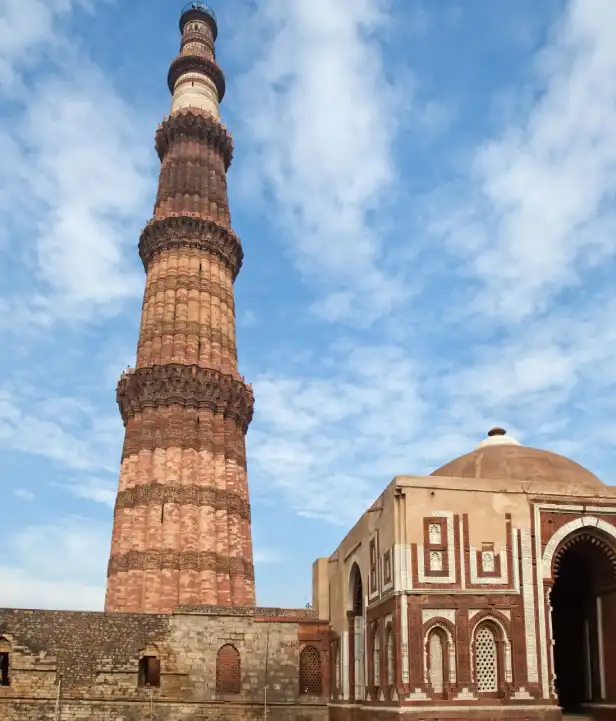
Yes, landmarks such as the Red Fort and Qutub Minar provide insight into history, architecture, and heritage.
Yes, markets like Chandni Chowk offer traditional goods, while modern malls provide contemporary retail experiences.
The city presents a wide culinary range, including regional Indian dishes and international cuisines suitable for varied tastes.
Yes, compact itineraries can be created to cover key attractions within a limited timeframe.
